Victoria’s New ‘Right to Work From Home’ Laws: What Employers Need to Know
If passed, eligible employees may be entitled to work from home up to two days per week, with employers required to justify why workplace attendance is necessary. Learn what the proposed reforms mean for your business and how to prepare.
Queensland Long Service Leave Exposure May Start Earlier Than Employers Think
A recent ruling found that an employee who worked in Queensland for less than three weeks was still entitled to Queensland long service leave.
Do I have to give my employee a copy of their contract if they request it?
In Australia, there is no general legal requirement that says you must hand over a copy of the employment contract just because an employee requests it.
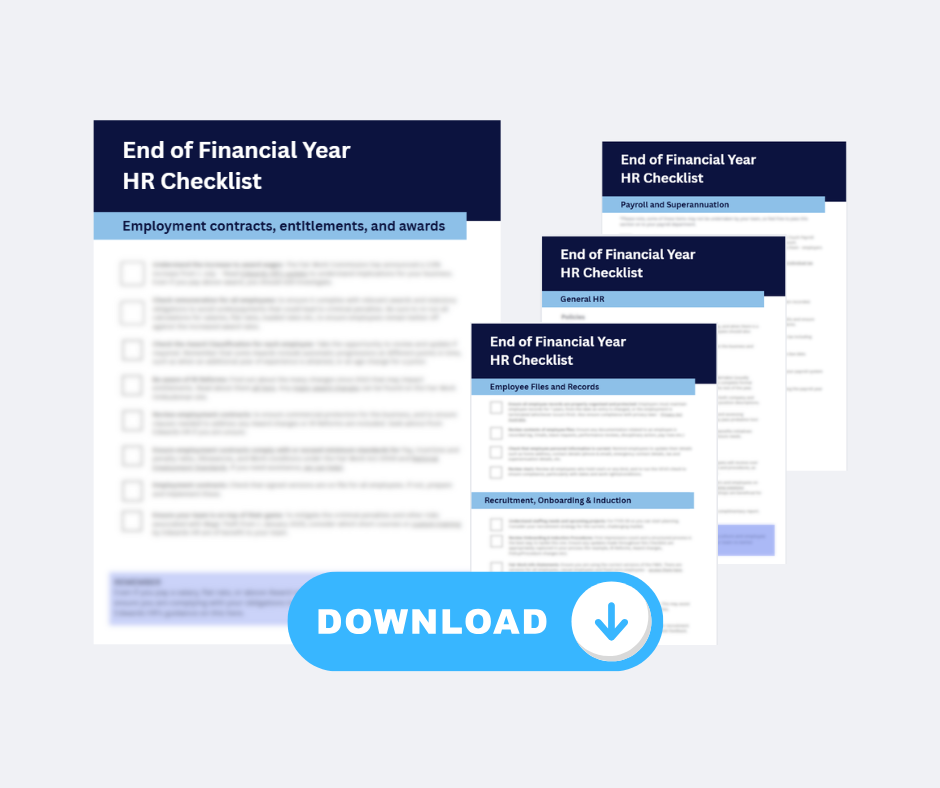
End of Financial Year – HR Checklist
A tool to help effectively maintain and improve your HR function this EOFY. Covering all the fundamental aspects of HR, to ensure you are taking proactive measures that will set your team and business up for success for the year ahead.
National Wage Increase – Quick Compliance Tips for Employers
What employers need to do following the 2026 wage increase, including reviewing pay rates, Award classifications, payroll settings, and employment records to ensure compliance.
Confirmed Wage Increase from 1 July 2026
A 6% increase to the National Minimum Wage and a 4.75% increase to minimum award wages from 1 July 2026. Impact award-covered employees, salaried arrangements, flat rates and enterprise agreements, requiring employers to review their remuneration practices.
The Payday Super Questions Employers Are Asking before 30 June
Employers are starting to ask what Payday Super will actually mean for their payroll, onboarding, cash flow, and day-to-day operations. Find out some of the most common questions we’re hearing from employers right now.
Payday Super Compliance: What Employers Need to Get Right
This will fundamentally change how employers manage superannuation compliance in Australia, impacting around 900,000 businesses. While the concept sounds simple, the compliance side is where many businesses may run into trouble.

Payday Super is Almost Here – Here’s What We’ve Learned Preparing for It
We understand this change introduces additional responsibility for employers because we are working through it ourselves too. So, we recently made the decision in our own business to begin paying super at the same time as wages, ahead of the proposed Payday Super changes.
The Federal Budget – What Employers Should Really Be Paying Attention To
From shifting employee expectations and ongoing skills demand to migration settings and infrastructure investment, the Budget provides useful insight into where the labour market is heading and what businesses may need to plan for next.
Victoria’s New ‘Right to Work From Home’ Laws: What Employers Need to Know
If passed, eligible employees may be entitled to work from home up to two days per week, with employers required to justify why workplace attendance is necessary. Learn what the proposed reforms mean for your business and how to prepare.
Queensland Long Service Leave Exposure May Start Earlier Than Employers Think
A recent ruling found that an employee who worked in Queensland for less than three weeks was still entitled to Queensland long service leave.
Do I have to give my employee a copy of their contract if they request it?
In Australia, there is no general legal requirement that says you must hand over a copy of the employment contract just because an employee requests it.
End of Financial Year – HR Checklist
A tool to help effectively maintain and improve your HR function this EOFY. Covering all the fundamental aspects of HR, to ensure you are taking proactive measures that will set your team and business up for success for the year ahead.
National Wage Increase – Quick Compliance Tips for Employers
What employers need to do following the 2026 wage increase, including reviewing pay rates, Award classifications, payroll settings, and employment records to ensure compliance.
Confirmed Wage Increase from 1 July 2026
A 6% increase to the National Minimum Wage and a 4.75% increase to minimum award wages from 1 July 2026. Impact award-covered employees, salaried arrangements, flat rates and enterprise agreements, requiring employers to review their remuneration practices.
The Payday Super Questions Employers Are Asking before 30 June
Employers are starting to ask what Payday Super will actually mean for their payroll, onboarding, cash flow, and day-to-day operations. Find out some of the most common questions we’re hearing from employers right now.
Payday Super Compliance: What Employers Need to Get Right
This will fundamentally change how employers manage superannuation compliance in Australia, impacting around 900,000 businesses. While the concept sounds simple, the compliance side is where many businesses may run into trouble.
Payday Super is Almost Here – Here’s What We’ve Learned Preparing for It
We understand this change introduces additional responsibility for employers because we are working through it ourselves too. So, we recently made the decision in our own business to begin paying super at the same time as wages, ahead of the proposed Payday Super changes.
The Federal Budget – What Employers Should Really Be Paying Attention To
From shifting employee expectations and ongoing skills demand to migration settings and infrastructure investment, the Budget provides useful insight into where the labour market is heading and what businesses may need to plan for next.